

Сантиметры и километры: полное руководство по переводу метрических единиц
摘要
- Чтобы перевести сантиметры в километры, разделите число сантиметров на 100 000 (или умножьте на 1 × 10⁻⁵).
- 这篇文章会先概括 “Сантиметры и километры: полное руководство по переводу метрических единиц” 的核心结论,再展开说明。
作者: OhToolBox Team
开发者和内容创作者,热衷于构建实用的在线工具。
OhToolBox 基于现代 Web 技术构建,重点关注稳定性、响应速度与安全性。我们会持续优化性能、本地化质量和工具覆盖范围,以更好满足真实使用场景。
Чтобы перевести сантиметры и километры , разделите количество сантиметров на 100 000 (или умножьте на 1 × 10⁻⁵). Например, 100 000 см равны ровно 1 км. По состоянию на май 2026 года этот перевод остаётся фундаментальной частью десятичной структуры метрической системы для точного измерения длины.
Как перевести сантиметры в километры: правило 100 000
Связь между сантиметрами (см) и километрами (км) вытекает из их общего отношения к метру (м) — базовой единице длины в СИ (Международной системе единиц). Поскольку метрическая система построена на десятичной основе, переход между единицами сводится к масштабированию на степени десятки.
Чтобы выполнить расчёт, представьте его как два отдельных шага:
- В каждом 1 метре содержится 100 сантиметров.
- В каждом 1 километре содержится 1 000 метров.
Перемножив их (100 × 1 000), вы получаете переводной коэффициент 100 000. Согласно стандартам NIST, проверенным в 2026 году, 1 см равен ровно 0,00001 км. Формула выглядит так:
km = cm / 100,000
Пошаговый практический пример
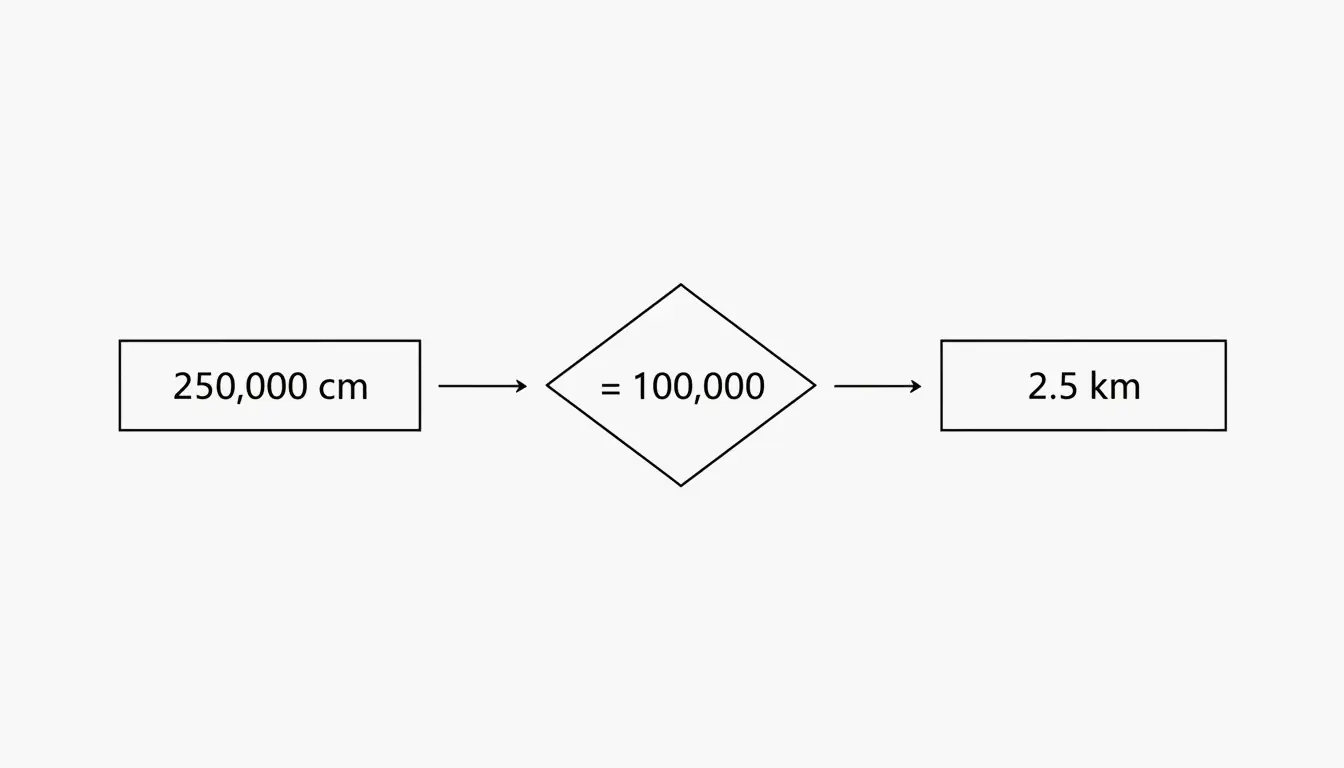
Если у вас есть значение 250 000 см и нужно узнать, сколько это в километрах, действуйте так:
- Определите значение: 250 000 см.
- Примените делитель: разделите 250 000 на 100 000.
- Итоговый результат: 2,5 км.
Как отмечает Calqro, такие переводы дают точные десятичные значения. Работая внутри метрической системы, вам не придётся беспокоиться об ошибках округления.
Сдвиг десятичной запятой: приём устного счёта для студентов
Одно из главных преимуществ метрической системы перед имперской — простота подсчётов в уме. Калькулятор вообще не нужен, если использовать правило «на 5 знаков влево». Поскольку в 100 000 пять нулей, для перевода из меньшей единицы (см) в большую (км) достаточно сдвинуть десятичную запятую на пять разрядов влево.
Например, чтобы перевести 90 000 см:
- Исходная запятая стоит в конце:
90,000.0 - Сдвиньте её на пять разрядов влево:
9,000.0→900.0→90.0→9.0→0.9. - 90 000 см = 0,9 км.
Этот наглядный приём помогает избежать ошибок, которые часто возникают при работе со сложными имперскими дробями — например, при попытке перевести дюймы в мили. Данные CoolConversion подтверждают, что 90 000 см идеально масштабируются в 0,9 км по этой логике.
Научная запись (1 × 10⁻⁵) и стандарты NIST
В науке и инженерии длинная цепочка нулей может привести к опечаткам или ошибкам чтения. Чтобы запись оставалась аккуратной, специалисты часто используют научную запись (1 × 10⁻⁵) для этого перевода. Она следует стандартам ISO 80000-3, задающим правила измерения величин пространства и времени во всём мире.
NIST (Национальный институт стандартов и технологий) — главное измерительное ведомство США по состоянию на 2026 год — определяет сантиметр как ровно одну сотую метра. При масштабировании до километра коэффициент $1 \times 10^{-5}$ гарантирует точность записей. CoolConversion отмечает, что эти коэффициенты сверяются с руководствами BIPM и ISO 80000-3 (последняя проверка — март 2026 года), чтобы сохранить согласованность мировой торговли и научных исследований.
Визуализация масштаба: от дизайна изделий до географии
Понимание разрыва между сантиметрами и километрами — это, по сути, вопрос ощущения размеров. Сантиметрами мы обычно измеряем то, что помещается в руке: медицинские инструменты или мелкие детали, тогда как километры — стандарт для карт и путешествий.
Чтобы представить, как выглядит соотношение 100 000:1, взгляните на эти примеры:
- Плотина «Три ущелья»: это колоссальное сооружение имеет длину около 2,3 км, или 230 000 см Википедия.
- Гора Эверест: при высоте 8,848 км её вершина находится на 884 800 см выше уровня моря.
- Линия Кармана: эту границу, которую часто называют «краем космоса», пролегает на высоте 100 км, то есть 10 000 000 см Википедия.
- Вояджер-1: по состоянию на 2026 год «Вояджер-1» находится на расстоянии более 25,4 миллиарда километров. В сантиметрах эта величина настолько огромна, что пользоваться ею почти невозможно — именно поэтому по мере роста расстояний мы меняем единицы измерения.
Перевод площади: квадратные сантиметры в квадратные километры
При переходе от длины к площади математика меняется, потому что вы работаете в двух измерениях. Поскольку линейный коэффициент равен 100 000, площадной коэффициент равен $100,000^2$, что составляет 10 000 000 000 (десять миллиардов).
Формула для площади:
km² = cm² / 10,000,000,000
По данным CoolConversion, 1 см² = 1 × 10⁻¹⁰ км². Это используется преимущественно в узких областях, например при спутниковом картографировании. Почтовую марку можно измерить как 6 см², а вот город измеряют в км², чтобы не сталкиваться с огромными нечитаемыми числами.
Заключение
Перевод сантиметров в километры прост: достаточно разделить на 100 000. Десятичная природа метрической системы делает это лёгким — будь то студент, сдвигающий запятую на пять разрядов, или учёный, использующий научную запись для отчёта по стандартам NIST. Для повседневных задач достаточно запомнить, что 100 000 см всегда равны 1 км. Если же вы работаете над масштабным проектом в области географии или землепользования, лучше воспользоваться калькулятором, чтобы справиться с огромными числами, возникающими при переводе квадратных километров.
FAQ
Сколько километров в 1 сантиметре?
В 1 сантиметре 0,00001 километра. В научной записи это выражается как 1 × 10⁻⁵ км. Этот точный коэффициент определён международными стандартами (СИ) и повсеместно используется для технической точности.
Какая формула перевода см в км самая простая — без калькулятора?
Самый простой способ — метод «сдвига запятой». Передвиньте десятичную запятую на пять разрядов влево. Например, если у вас 500 000,0 см, то сдвиг запятой на пять разрядов превращает значение в 5,0 км.
Сантиметры и километры относятся к имперской или метрической системе?
Обе единицы принадлежат метрической системе (также известной как Международная система единиц, или СИ). Метрическая система используется во всём мире в науке, медицине и большей части международной торговли, тогда как американская customary или имперская система оперирует единицами вроде дюймов и миль.