

Discover What Makes Your Birthday Unique: A Fun Facts Calculator for 2026
TL;DR
- Your birthday is more than just a date on the calendar
- This article explains the key takeaways behind "Discover What Makes Your Birthday Unique: A Fun Facts Calculator for 2026".
- The article metadata includes a published and maintained timeline for better context.
Author: SectoJoy
Developer and content creator passionate about building useful online tools.
OhToolBox is built with modern web technologies to keep the experience stable, responsive, and secure. We continuously improve performance, localization quality, and tool coverage based on real usage needs.
Your birthday is more than just a date on the calendar — it is a doorway into a surprising collection of facts about you. A birthday facts calculator takes your date of birth and instantly reveals things you probably never knew: your exact age down to the second, how rare your birthday is, your zodiac signs, your birthstone, and even what generation you belong to. Best of all, everything runs right in your browser — nothing is stored, and your personal data stays completely private.
Let us walk through what you can discover, one section at a time.
Your Exact Age — Down to the Second
Most of us know our age in years, but have you ever wondered exactly how many days or seconds you have been alive? A birthday facts calculator gives you the full picture.
Here is how it works: the tool subtracts your birth date from today’s date and breaks the result into years, months, days, hours, minutes, and seconds. According to Intelligent Calculator, this is done by counting the full years first, then adjusting for whether your birthday has already passed this year.
For example, as CalendarZ notes, someone born on December 1, 2001, has already lived through more than 769 million seconds. They are fast approaching the 1 Billion Seconds milestone, which typically arrives around age 31 years and 8 months. Imagine throwing a “1 Billion Seconds Alive” party!
| Milestone | Approximate Age |
|---|---|
| 100 million seconds | ~3 years, 2 months |
| 500 million seconds | ~15 years, 10 months |
| 1 billion seconds | ~31 years, 8 months |
| 10,000 days alive | ~27 years, 5 months |
What About Leap Year Birthdays (February 29)?
People born on February 29 — sometimes called Leaplings — make up only about 1 in 1,461 births, as noted by EveryFreeTool. During non-leap years, different places handle the official date differently:
- UK and Hong Kong: The legal birthday moves to March 1.
- Many U.S. states: The birthday is recognized on February 28.
A good birthday calculator handles this automatically, so leaplings get accurate results without any extra hassle.
How Common (or Rare) Is Your Birthday?
Not all birthdays are created equal. Birth rates follow clear seasonal patterns, which means some dates are far more common than others.
Data from How Rare Is My Birthday reveals some fascinating patterns:
| Category | Examples |
|---|---|
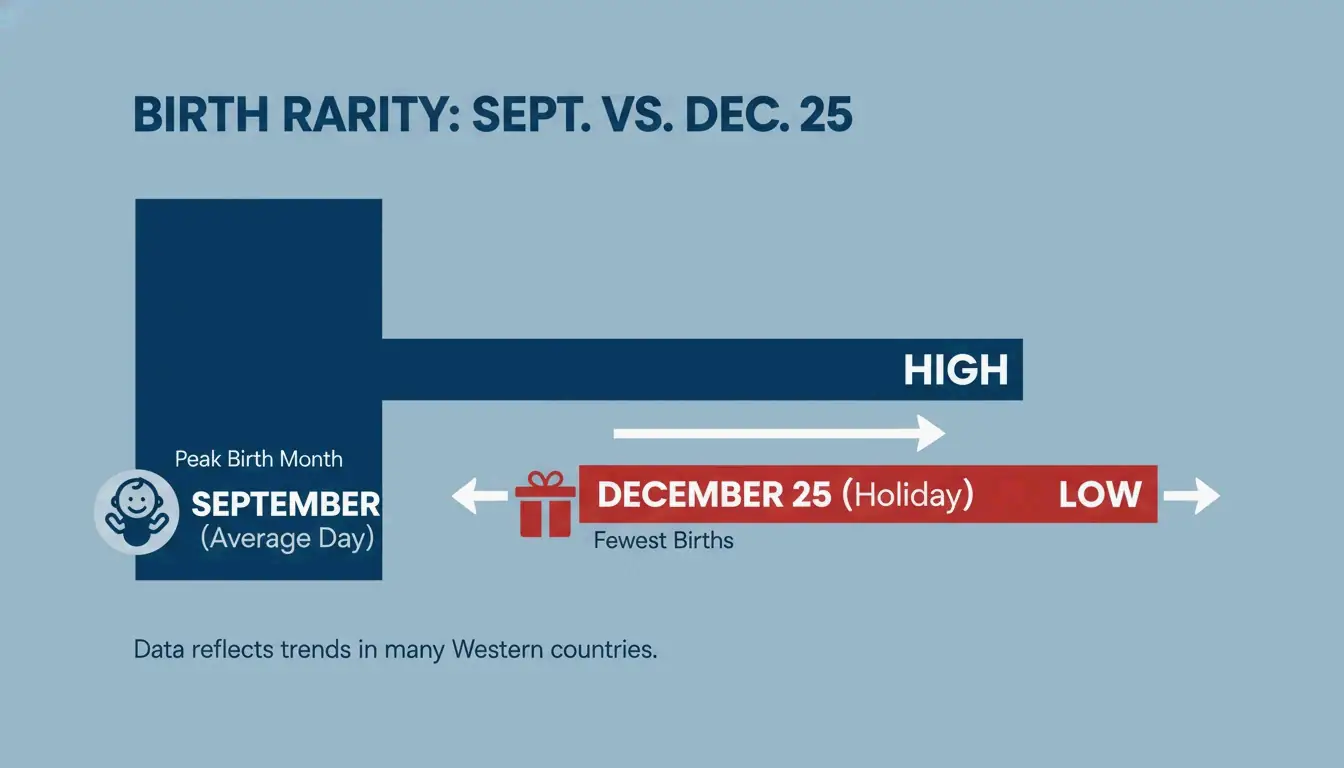
| Most common birthday | September 9 (peak birth season is July through early October) |
| Rarest birthdays | December 25 (Christmas), January 1 (New Year’s Day), February 29 |
| Busiest day of the week | Tuesday |
| Quietest day of the week | Sunday |
Why the gap? Hospitals schedule fewer elective deliveries (C-sections and inductions) on weekends and major holidays. As Caesar Cipher points out, Tuesday is the most common day for births in the U.S., followed by Monday and Wednesday. Saturday and Sunday see noticeably lower numbers.
Real-Life Scenario
Imagine you are planning a group event and want to avoid date conflicts. Knowing that September birthdays are extremely common might change how you plan. Or, if your birthday falls on December 25, you now have a fun conversation starter: “I share my birthday with only the rarest group of people!”
Your Zodiac Sign, Birthstone, and Birth Flower
Your birth date connects you to a set of traditional symbols that people have cherished for centuries.
Western Zodiac: There are 12 signs, each covering a range of dates. For example, as EveryFreeTool notes, an April 25 birthday falls under Taurus, while March 25 is Aries.
Chinese Zodiac: This follows a 12-year animal cycle. In 2026, we are in the Year of the Horse.
Birthstones and Birth Flowers: These are tied to your birth month. GetZenQuery notes that April’s primary birthstone is the Diamond, symbolizing strength. Here is a quick reference:
| Month | Birthstone | Symbolizes |
|---|---|---|
| January | Garnet | Protection |
| February | Amethyst | Peace |
| March | Aquamarine | Courage |
| April | Diamond | Strength |
| May | Emerald | Wisdom |
| June | Pearl | Purity |
| July | Ruby | Passion |
| August | Peridot | Growth |
| September | Sapphire | Wisdom |
| October | Opal | Hope |
| November | Topaz | Friendship |
| December | Turquoise | Good fortune |
According to EveryFreeTool, birthstone traditions date back to the 15th century, making them a fun piece of personal history to share.
Life Milestones Worth Tracking
A birthday facts calculator does not just look backward — it also helps you look ahead. Here are some milestones worth knowing about:
Next Birthday Countdown: The tool calculates how many days remain until your next birthday. If your birthday has already passed in 2026, it counts down to 2027.
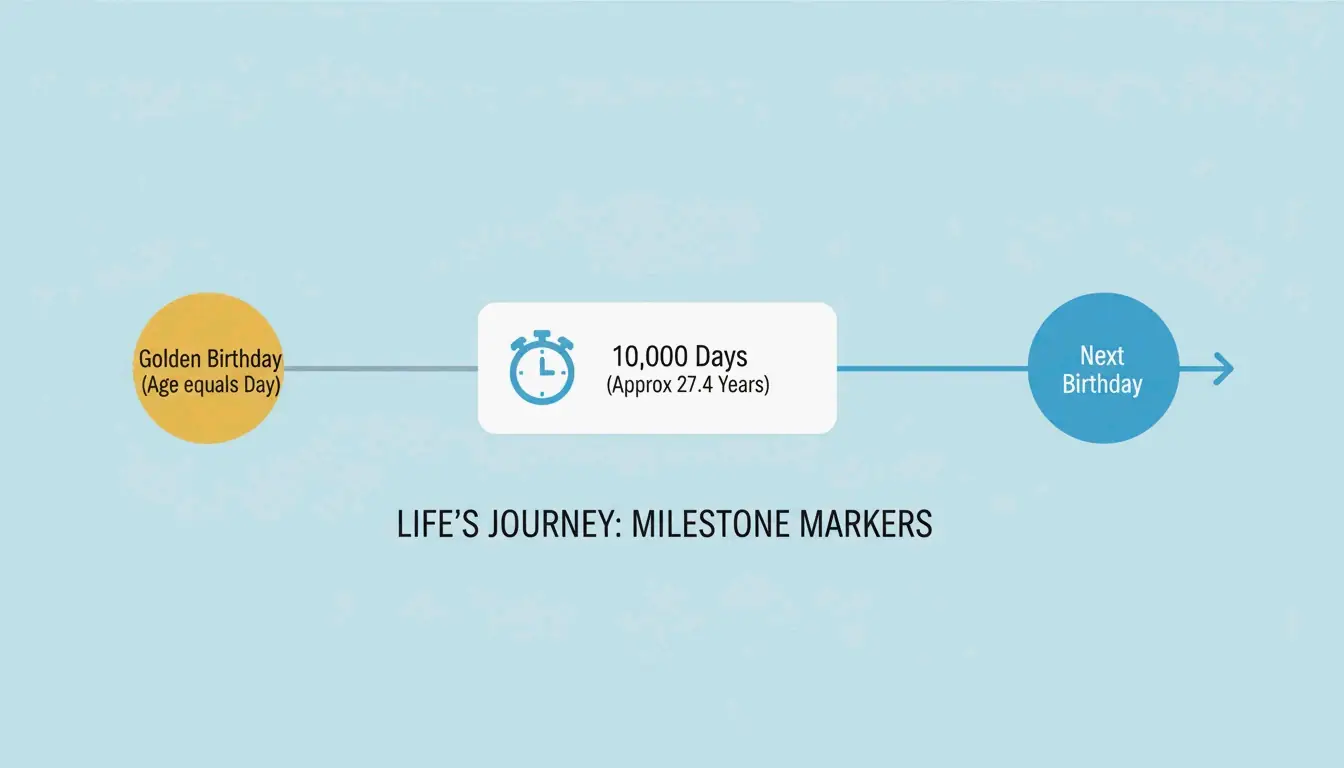
Golden Birthday: This is the special occasion when your age matches the day you were born. For example, if you were born on the 15th of a month, your Golden Birthday is when you turn 15.
10,000 Days Alive: As Caesar Cipher estimates, this milestone arrives when you are roughly 27 years and 5 months old. It is a great excuse for a low-key celebration.
Which Generation Do You Belong To?
Knowing your generational cohort helps you understand your place in the cultural landscape. Intelligent Calculator uses these widely accepted boundaries:
| Generation | Birth Years | Age in 2026 |
|---|---|---|
| Millennials | 1981 – 1996 | 30 – 45 |
| Generation Z | 1997 – 2012 | 14 – 29 |
| Generation Alpha | 2013 – present | 0 – 13 |
For those born in 2005 and 2008, 2026 is a landmark year: they turn 21 and 18 respectively, stepping into new chapters of adulthood within Gen Z.
On This Day in History
Every birthday shares its date with memorable moments from the past. If you were born on December 1, for instance, CalendarZ notes that on that date in 1955, Rosa Parks refused to give up her bus seat in Montgomery, Alabama. Back in 1913, Ford Motor Company introduced the first moving assembly line on the same date.
Fun Captions for Your Birthday Posts
Want to impress your friends on social media? Try one of these:
- “I have officially survived 1 billion seconds of Earth’s chaos!”
- “Celebrating my Golden Birthday — the only time my age and the date actually match.”
- “Born on a Tuesday: statistically common, but personally one of a kind.”
Privacy First: How These Tools Keep Your Data Safe
A trustworthy birthday facts calculator does all its work right in your browser. That means your birth date is never sent to a server or stored in a database. You get your fun facts instantly, and when you close the tab, everything disappears. This is the approach recommended by privacy-focused tool makers — your personal information should stay personal.
Conclusion
Your birthday holds a surprising amount of information: your exact age in seconds, how rare your birth date is, your zodiac and birthstone, upcoming milestones, and your generational identity. A birthday facts calculator brings all of this together in seconds — no sign-ups, no data collection, just fun and useful insights. Give it a try and discover something new about the day you were born.
FAQ
What is the rarest birthday in the United States?
According to How Rare Is My Birthday, Christmas Day (December 25) is statistically the rarest birthday. January 1 and February 29 are also very uncommon. This is mainly because hospitals schedule far fewer C-sections and inductions on major holidays.
How does the calculator handle leap year birthdays (February 29)?
In non-leap years, most calculators shift the date to March 1 for accuracy. Caesar Cipher explains that the tool accounts for the extra 0.2425 days per year, identifies “Leapling” status, and provides a countdown to the next true four-year anniversary.
What is the Birthday Paradox?
The Birthday Paradox is a probability theory that says in a group of just 23 people, there is a 50% chance that two of them share the same birthday. According to Caesar Cipher, that probability jumps to 99.9% in a group of 70. It sounds impossible, but the math checks out.
Is my birth date stored when I use a birthday facts calculator?
Privacy-focused tools process everything locally in your browser. Your birth date is never uploaded to a server or saved in any database. When you close the page, the data is gone.